How to Choose Swimwear for Your Shape — Without the Rules
Forget “flattering” as a verdict on your body. Here’s how to read a cut, so the swimsuit works for you — not the other way round.

If you have ever stood in a fitting room holding three sizes of the same swimsuit, you already know the problem: sizing is inconsistent, advice online is generic, and most of us end up guessing. This isn’t a guide to hiding your body. It’s a guide to choosing pieces that work with the body you have right now.
At Caryoca we believe the body doesn’t need correction — it needs consideration. So when we say a cut is “flattering”, we mean one thing only: it works with your proportions instead of fighting them.
Start with a starting point, not a label
Forget rigid body-type categories — most of us are a blend. A quick check gives you somewhere to begin:
- Stand in front of a mirror in fitted clothing and look straight on.
- Compare the width of your shoulders, waist and hips to each other.
- Notice where you naturally carry the most volume — bust, waist or hip.
Most people recognise themselves in one or two of five common patterns: balanced (bust and hips similar, with a defined waist), top-weighted (shoulders and bust wider than hips), bottom-weighted (hips and thighs wider than shoulders and bust), straight (little difference between bust, waist and hip) and fuller midsection (the waist is the widest point). Use whichever feels closest as a lens — not a box.
Reading a cut, pattern by pattern
| Pattern | Cuts that tend to work | Worth reconsidering |
|---|---|---|
| Balanced | Almost anything — this is the shape that can experiment most freely. | Nothing in particular; have fun with prints. |
| Top-weighted | High-waisted bottoms, plunge or halter tops, darker tops with brighter bottoms. | Tiny unstructured triangles; busy prints on top. |
| Bottom-weighted | Bold or bright tops, high-leg or boy-short bottoms, underwire or shelf-bra styles. | Low-rise bottoms that cut across the widest part of the hip. |
| Straight | Ruffles, cut-outs, belted one-pieces — anything that creates curve. | Perfectly matching, minimal-detail sets, which can read as shapeless. |
| Fuller midsection | High-waisted bottoms, wrap or twist-front tops, vertical seaming. | Horizontal banding right at the natural waist. |
One more thing: one-piece versus two-piece is a comfort decision, not a shape rule. Both come in cuts that work for every body. The cut matters far more than the piece count.
Support is about the band, not the straps
If your swimsuit has a structured top, borrow the logic of a well-fitted bra:
- The band should sit level and snug, never riding up your back. It does most of the work.
- Underwire should sit flat against the ribcage, fully encasing the breast with no gaping.
- If the centre panel between the cups doesn’t lie flat against your sternum, the cup is likely too small.
- Straps support less than you’d think. If you’re tightening them to feel held, look at the band size instead.
Check the fabric before you fall for the print
A little discernment at the point of purchase saves a lot of disappointment later. Before you buy, check:
- Stretch recovery — gently stretch the fabric. Good quality snaps back immediately.
- Lining — swimwear should be fully lined, especially in light colours. Hold it up to the light.
- Seams — flat, even stitching with no puckering. Double-stitched seams last longer.
- Fabric blend — look for roughly 15–20% elastane or spandex for lasting shape retention.
Five fit mistakes to avoid
- Buying your “usual” size without checking the brand’s own size chart. Treat every new brand as a fresh start.
- Choosing a print because it’s trending, rather than because it suits your shape or colouring.
- Ignoring the lining — a beautiful print means little if it turns sheer in the water.
- Sizing down “to be safe”. A too-small cut always looks and feels worse than a well-fitted larger size.
- Washing swimwear in the machine or with regular detergent, which breaks down elastane quickly. Rinse in cool fresh water after every swim, press (never wring) the water out, and dry flat in the shade.
Fit is a skill, not a body type. Once you know what to look for, you’ll shop faster and return far less.
Want the full version — including intimates, styling for different occasions and a one-page cheat sheet to save on your phone? Our free Find Your Fit guide covers it all in 11 pages.

Reading the Beach: Flags, Rips and Swimming with Confidence — from Cornwall to California to Copacabana
Confidence in the water starts before you get wet. What the flags mean in the UK, the USA and Brazil, how to spot a rip, and what to do if you’re caught in one.

Your Beach Skincare Ritual: Before, During and After the Sun
Sun-kissed should never mean sunburnt. A simple, three-part ritual to protect and care for your skin on every beach day.
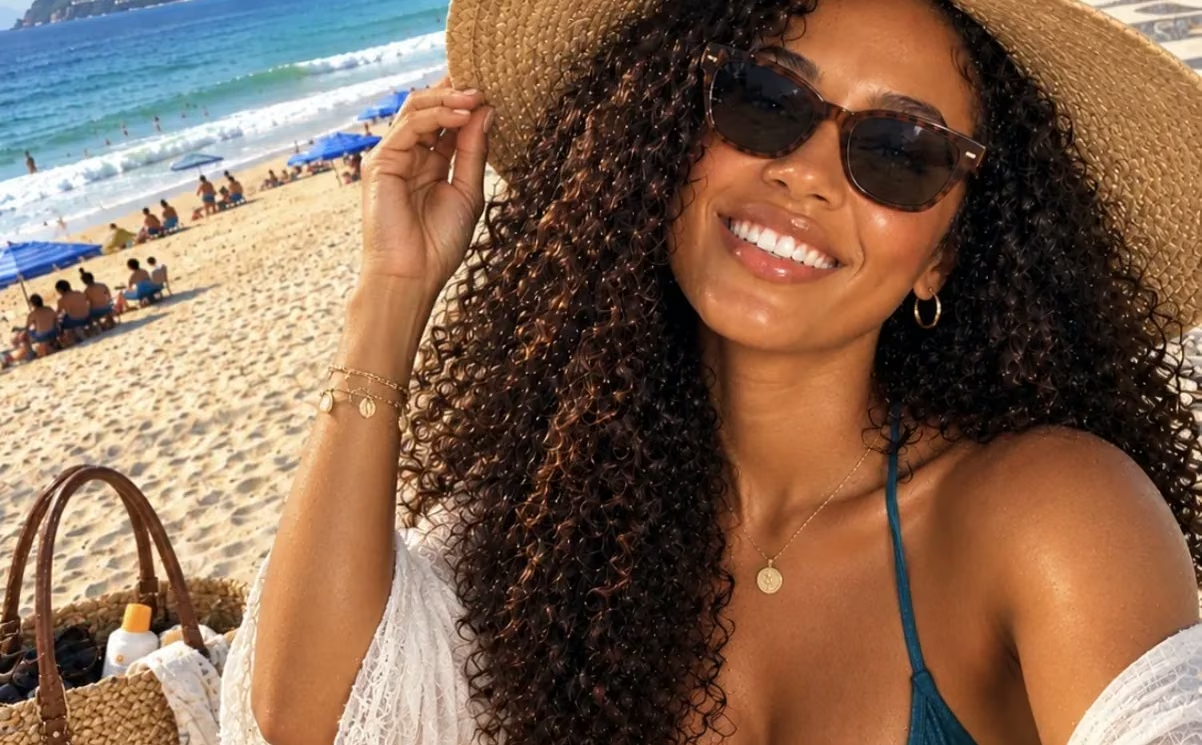
A Day on Ipanema: How Rio Does the Beach
From the postos to the sunset applause at Arpoador, a beginner’s guide to the beach that inspired a song — and a whole way of living.